This project helps people understand the dangers of using woodworking machines. It is led by Cafoc from Dijon and GIP FTLV from Burgundy, under the CCCA-BTP program.
This training tool is made for vocational students (CAP). It allows them to learn how to use dangerous machines in a completely safe environment.
The learning goals are simple: identify machine parts, understand how the machines work, follow safety rules, and learn how to act in real situations using a game-like style.
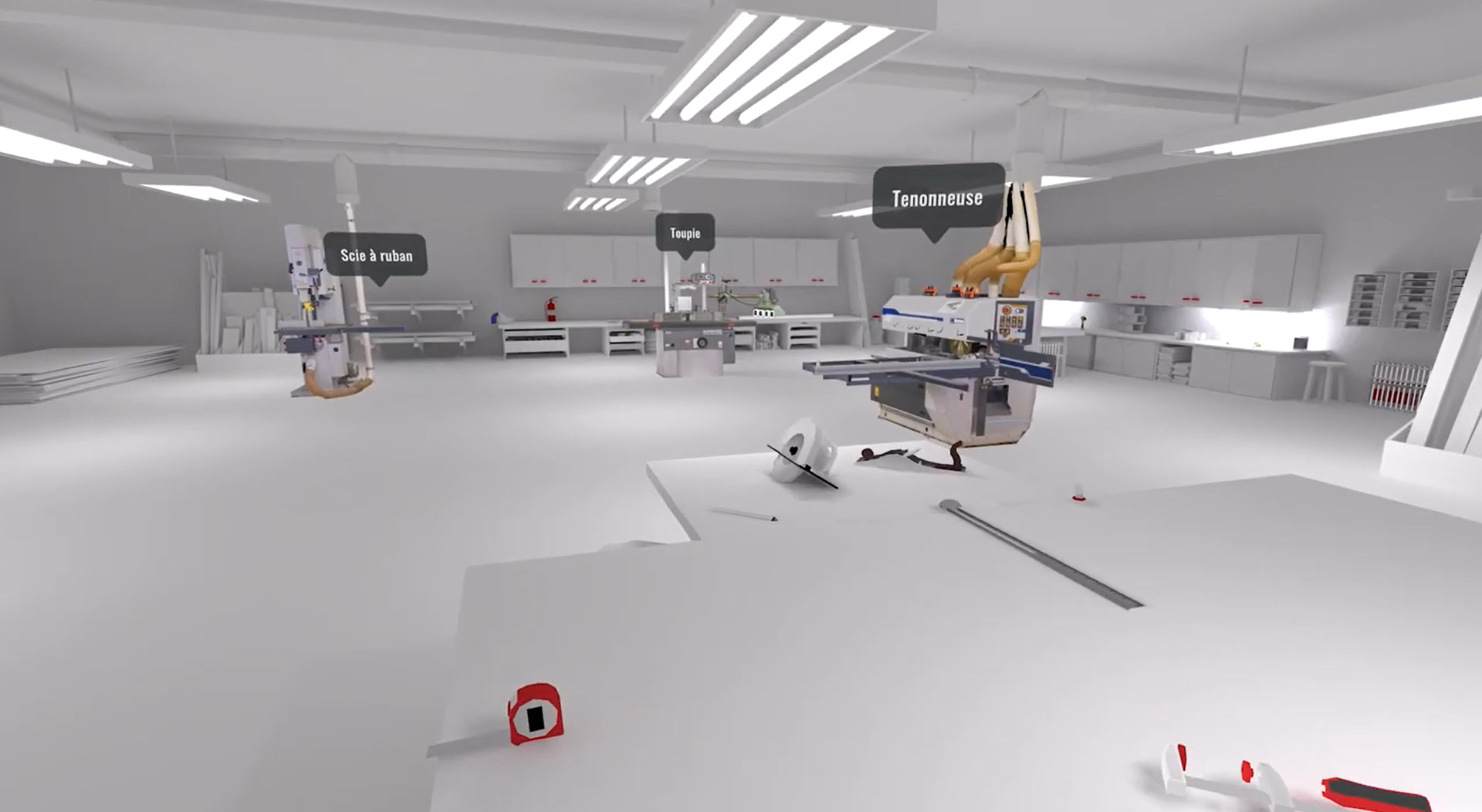
A virtual avatar guides students through the training. There are five complete scenarios that teach users how to use machines like the panel saw, spindle moulder, tenoner, mortiser, and jointer.
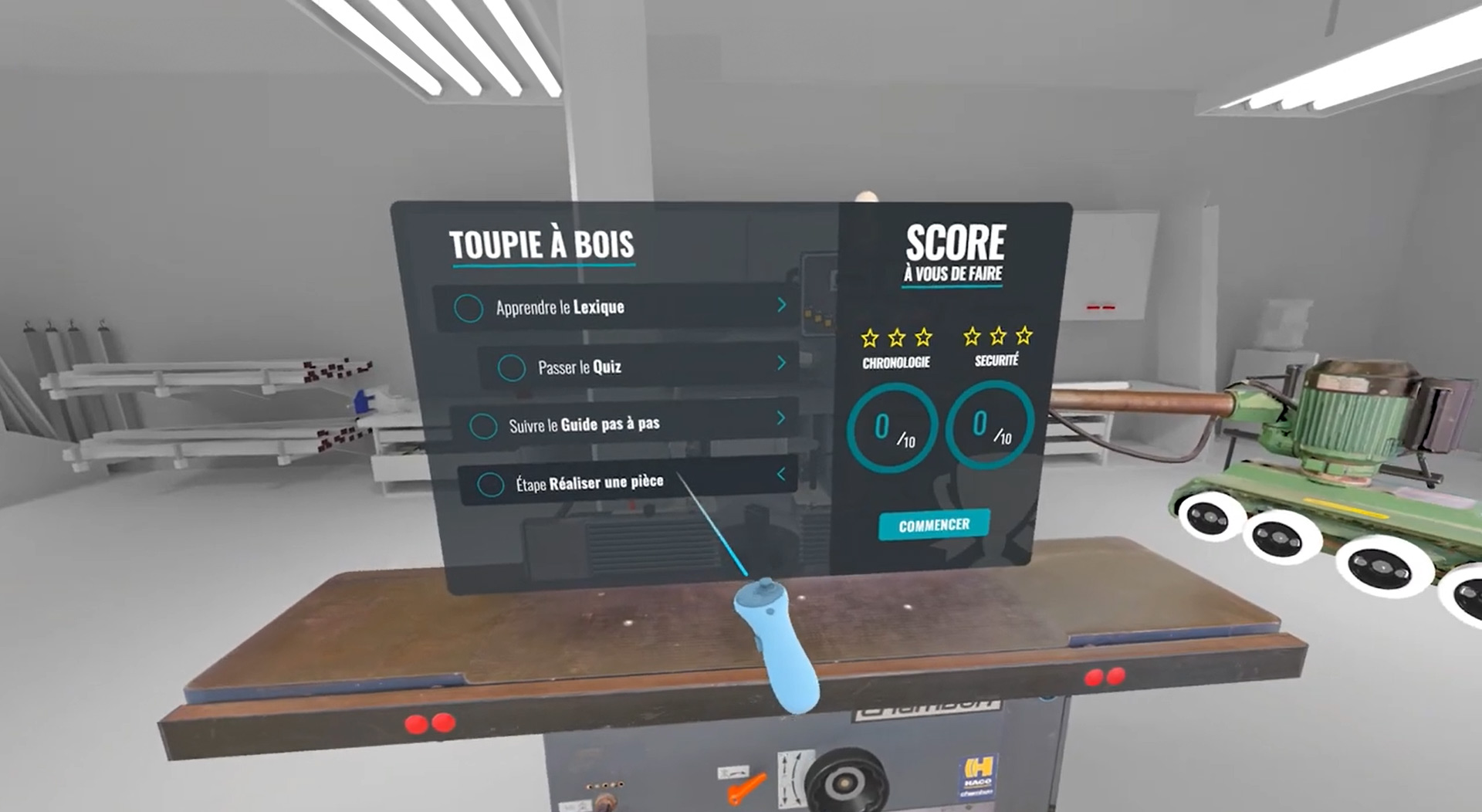
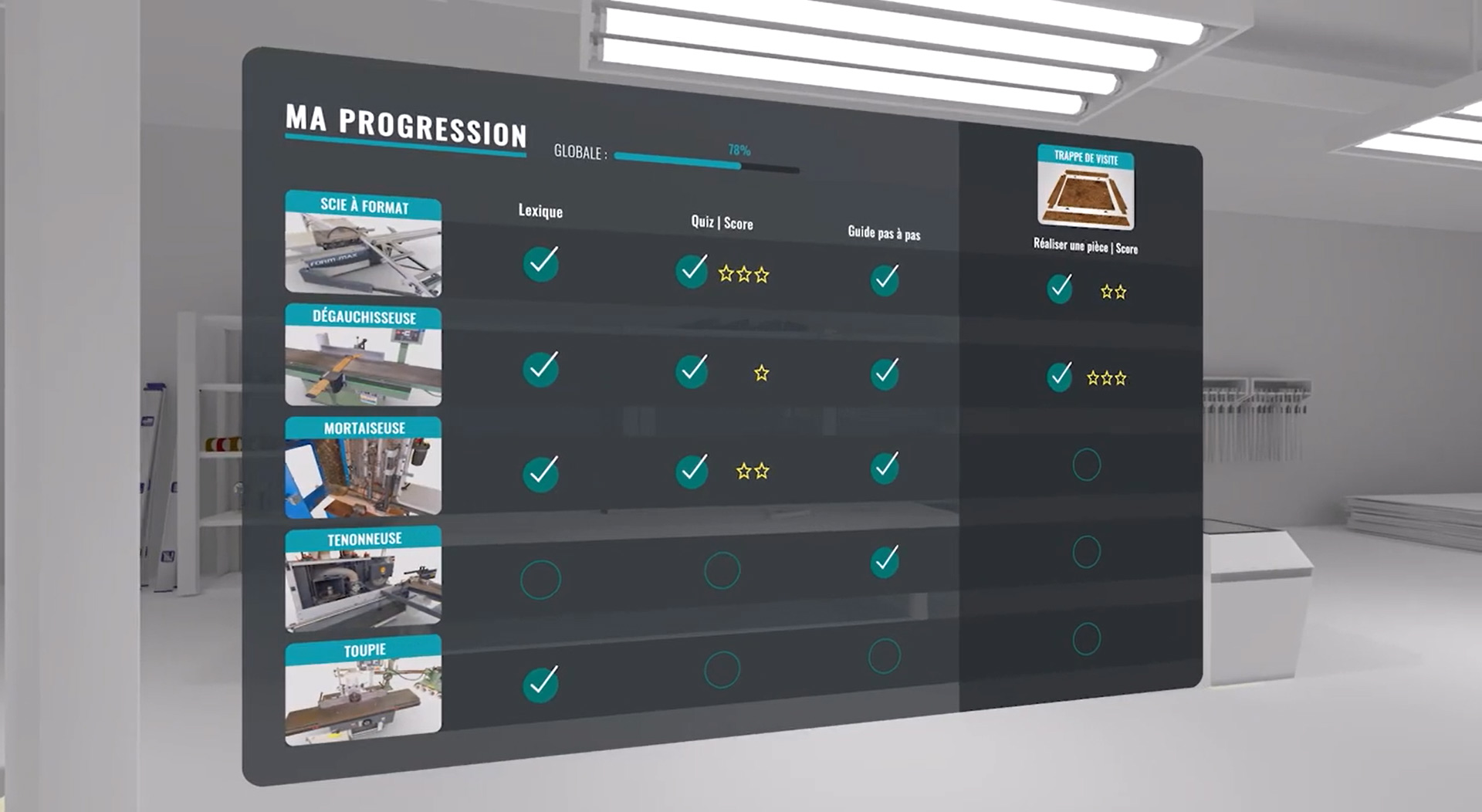
The system includes scores to track progress and a dashboard for instructors.
Da Viking Code was selected to design and build this immersive VR and WebGL app using Unity.
The immersion is incredible! You immediately understand the safety stakes. The avatar guides you step by step, and being able to virtually manipulate the machines really helps reinforce proper techniques. It's a powerful educational tool that can transform the way future professionals are trained on these machines.
The experience has three learning levels:
Identification: Learn about the machine, vocabulary, danger zones, and parts. This section has a short quiz to check what you learned.
Step-by-step guidance: A virtual avatar explains every action with 3D animations and videos. In VR, hand tracking follows your movements. In the Web version, you use 2D interactions.
Hands-on practice: The student enters a virtual workshop to finish a specific task. The system gives scores, points out errors, and offers helpful feedback.
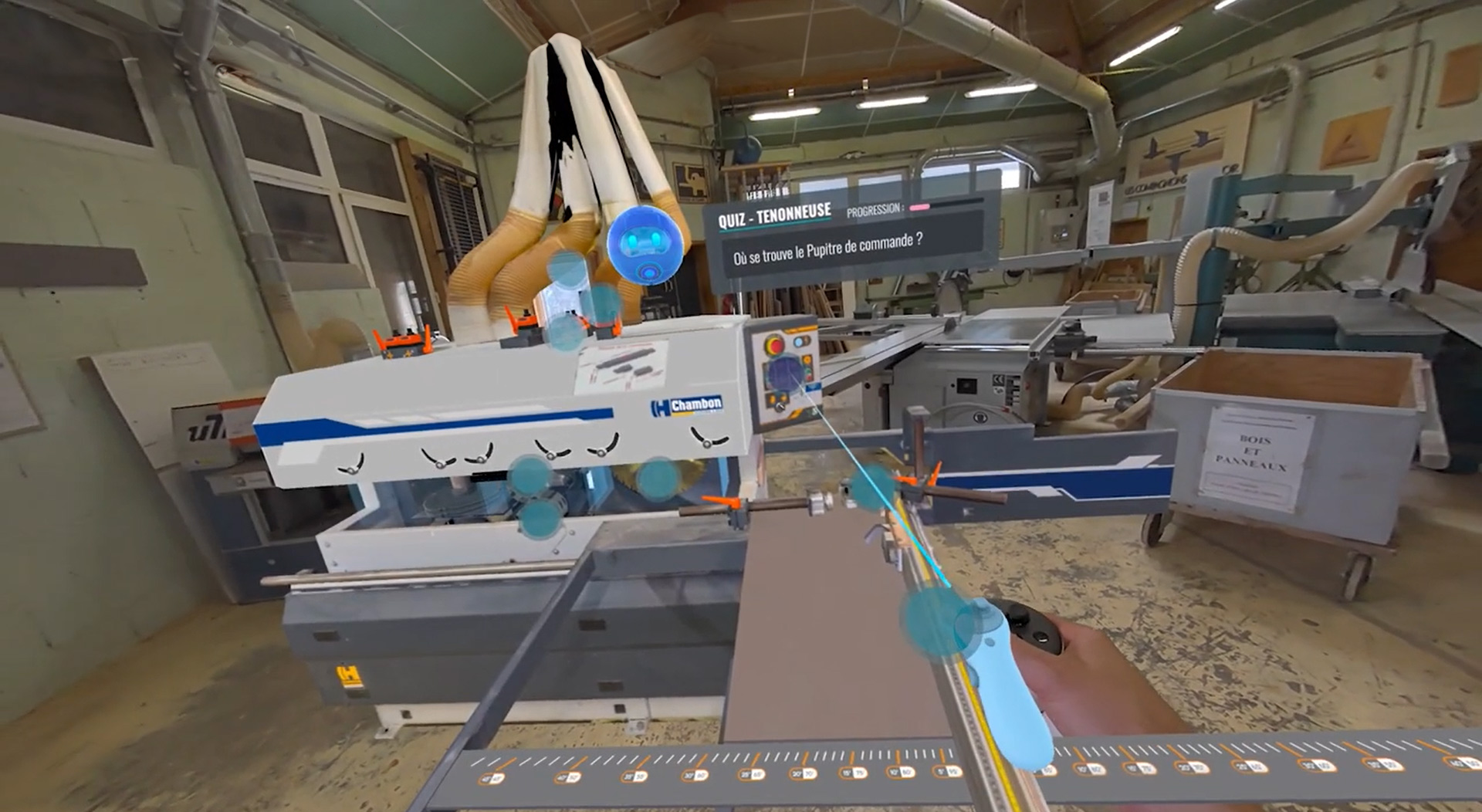
The VR version uses hand tracking, mixed reality, and easy-to-read menus. It is also designed to be accessible for as many people as possible.The WebGL version puts the whole experience on a 2D screen, so it works on computers and phones.
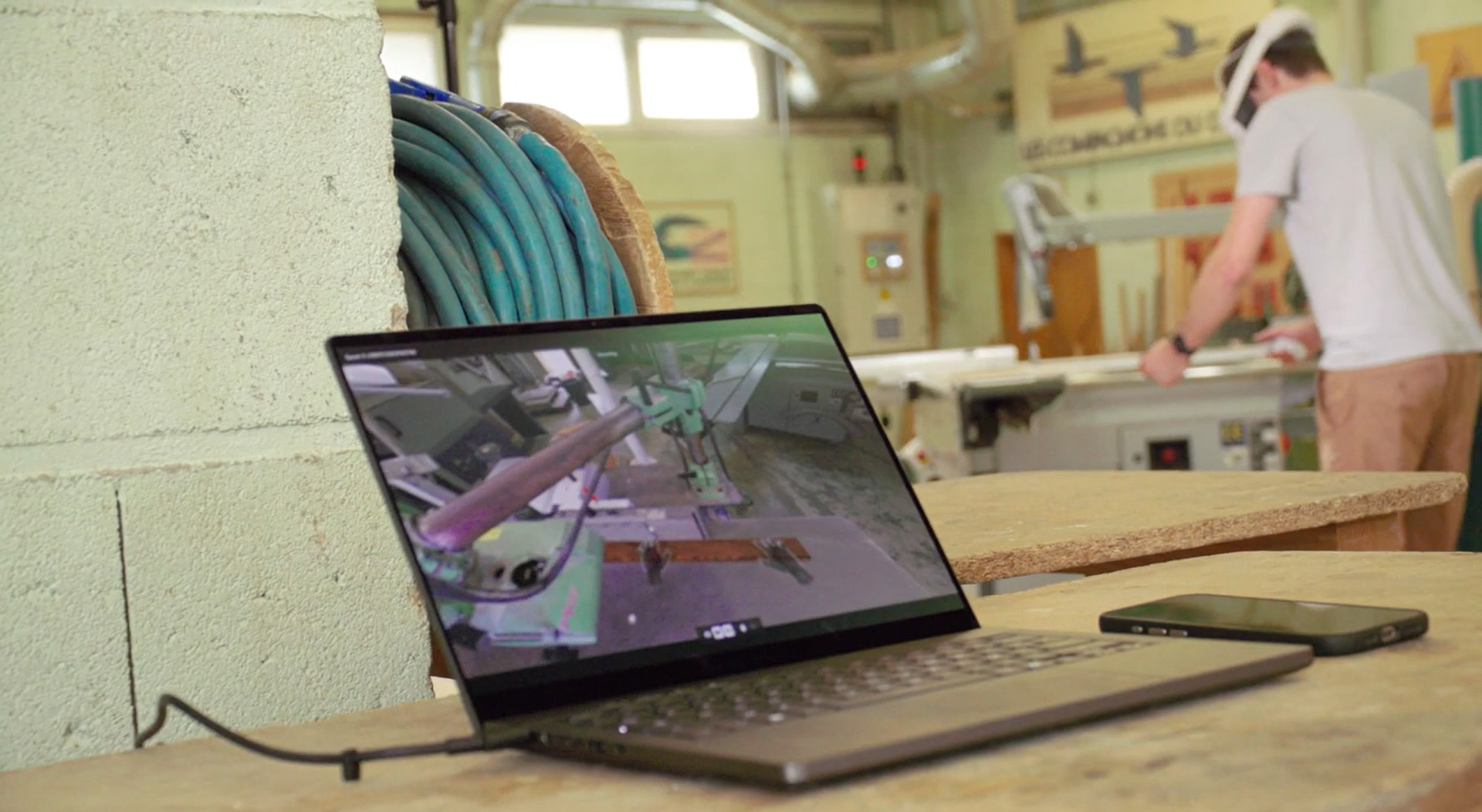
We built this project to last a long time by using the OpenXR standard. This makes it compatible with Meta, Pico, and HTC headsets. The whole experience is one single Unity project, which makes it easy to update and deploy for VR, Mixed Reality, and the Web.
This tool is great for training centers and safety events. It allows learners to practice safely, repeat important movements, and test themselves in ways they cannot do in a classroom.
The Da Viking Code team are experts in virtual reality, digital twins, game design for education, and Unity development. Contact us to talk about your immersive or XR project needs.
